We invest in early-stage food tech that reshapes the future of food—making innovation more accessible, visionary ideas more tangible, and bridging the gap between science and society.

We’re Feeding Tomorrow, Today.
Today’s global food system is failing: we’re over-reliant on animal agriculture, facing resource scarcity, and generating unsustainable levels of emissions. Meanwhile, most consumers don’t realize they’re eating products that are inefficient, outdated, and harmful to both their health and the planet.
WD Biotech, rooted in Israel’s food tech ecosystem, is part of a global movement rewriting this story — one where science, innovation, and impact investing intersect to reimagine what we eat and how it’s made.
What’s at Stake
The Old Model is Broken
Today’s food system is outdated, resource-heavy, and emission-intensive — and most people don’t realize their daily plates depend on processes that harm both their health and the planet.
The Stakes if Nothing Changes
If we stay on this path, we remain locked in systems that drive climate collapse, waste resources, and limit access to healthier, ethical options.
Innovators stay underfunded, consumers miss better choices, and investors continue reinforcing the status quo.

We’re Here to Change the Narrative
WD Biotech invests early in founders creating better proteins, smarter ingredients, and next-generation food systems — making food tech more accessible, transparent, and impactful for everyone.
“Today, two billion people face food insecurity, and that number may grow. The United Nations projects that the global population will near 10 billion people by 2050. This population growth will require us to close a 56 percent food production gap. Data from FAO and Credit Suisse show that we are already unable to meet most nations’ dietary guidelines within planetary limits. For instance, feeding every human today in accordance with the U.S. dietary guidelines would require 3.5 Earths. This disparity is due to the resource requirements of conventional meat production. Scaling animal agriculture to meet a growing population’s needs will push us even further beyond sustainable limits.” — Good Food Institute
What We Do
At WD Biotech we turn bold food technology into cultural conversations, making science something people can taste, trust, and celebrate.

Investment and
Amplification
We invest in early stage food technology ventures, with a special focus on Israel’s food tech ecosystem. We help visionary founders turn possibility into reality.

Public Education and
Storytelling
We make the complex simple. Through talks and digital content, we help people understand how food technology works, why it matters, and what becomes possible when science and society meet.

Advocacy for
Resilience
We place food technology at the center of conversations about climate, conflict, and security. By showing how alternative proteins can reduce harm and expand access, we advocate for systems built on resilience and care.
Spotlight: How Our Partners are Fueling Innovation
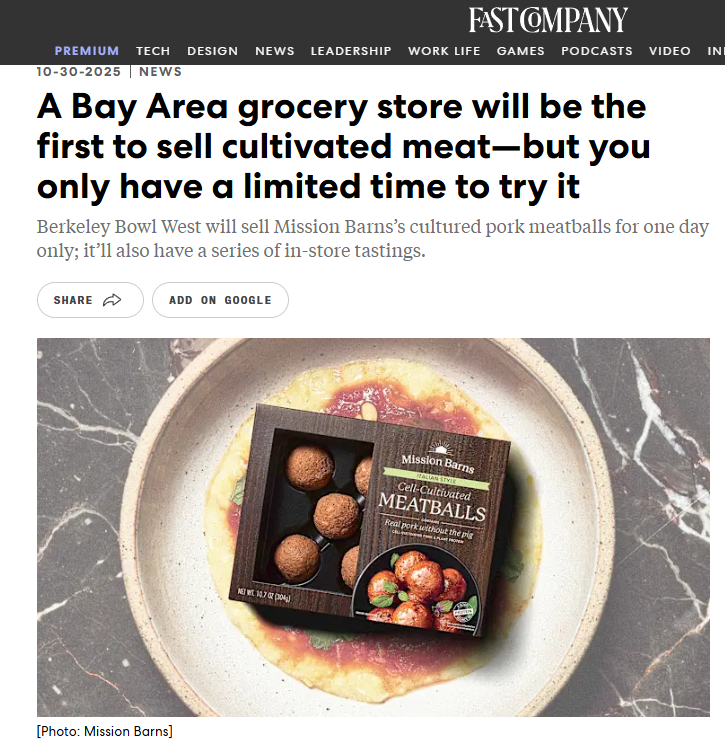
A Bay Area grocery store will be the first to sell cultivated meat - but you only have a limited time to try it
Mission Barns, the first company in the USA to sell B2C cultivated food products, conducted a one-day grocery store beta on November 1st.
TEDx Talks:
Better protein for pets, better protein for us
Learn more about the future of pet food with Rich Kelleman, CEO of one of our partners, Bond Pet Foods.
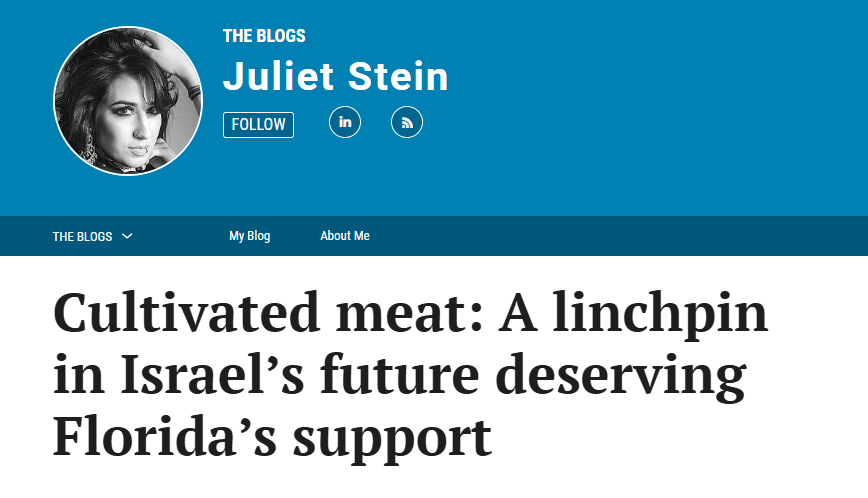
Cultivated meat: A linchpin in Israel’s future depending on Florida’s support
Juliet Stein, VP of WD Biotech and contributor to The Times of Israel Blog, dives into the urgency of why food technology matters today.